
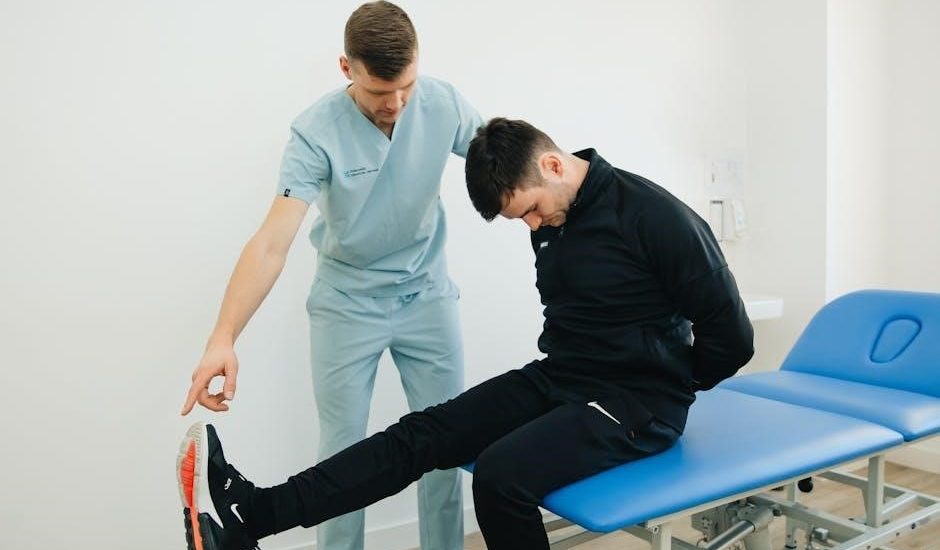
Exploring MET for SI joint dysfunction involves utilizing patient muscle contractions against a precisely controlled counterforce, aiming to restore pelvic alignment and reduce pain.
What is the Sacroiliac (SI) Joint?
The sacroiliac (SI) joint is a strong, weight-bearing joint connecting the sacrum – the triangular bone at the base of the spine – to the iliac bones of the pelvis. Unlike many joints, it possesses limited, yet crucial, motion. This motion is essential for shock absorption, transferring forces from the upper body to the lower limbs, and overall pelvic stability.
Dysfunction within the SI joint can manifest as lower back pain, buttock pain, groin pain, or even pain radiating down the leg, mimicking sciatica. Understanding its anatomy and biomechanics is fundamental when applying techniques like Muscle Energy Technique (MET) to address imbalances and restore optimal function. Proper assessment is key before initiating any MET protocol.
Understanding Muscle Energy Technique (MET)
Muscle Energy Technique (MET) is a manual therapy approach that utilizes the patient’s own muscle contractions as a therapeutic force. It’s a gentle, active technique, differing from passive stretching or forceful manipulation. The practitioner positions the patient’s body in a specific way, then asks them to contract a muscle against a counterforce provided by the therapist.
This contraction is held briefly, followed by relaxation, allowing the joint to move into a new, more optimal position. MET aims to restore musculoskeletal balance by addressing muscle imbalances and joint restrictions. It’s a widely used technique, often found detailed in specialized MET guides and resources.

Assessment of SI Joint Dysfunction
Accurate diagnosis is crucial; assessment involves palpation, motion testing, and orthopedic tests to identify specific SI joint movement restrictions and pain patterns.
Palpation and Motion Testing
Palpation focuses on identifying tenderness, muscle spasm, and positional faults around the sacroiliac joint, including the posterior superior iliac spine (PSIS) and sacral base. Motion testing assesses joint play, evaluating for asymmetry or restriction in anterior-posterior and lateral gliding.
Practitioners use their hands to feel for movement quality, noting any differences between the left and right sides. These assessments help determine the type and degree of SI joint dysfunction, guiding the selection of appropriate MET techniques. Careful observation and tactile feedback are essential for accurate evaluation and effective treatment planning.
Orthopedic Assessment Tests
Several orthopedic tests aid in confirming SI joint dysfunction, including the Gaenslen’s test, FABER (Patrick’s) test, and the sacral thrust test. Gaenslen’s involves flexion of the hip and rotation, stressing the SI joint. FABER assesses hip and SI joint pathology through hip flexion, abduction, and external rotation.
The sacral thrust test evaluates for movement restriction. A cluster of positive tests increases diagnostic confidence. These tests, combined with palpation, provide a comprehensive assessment. It’s crucial to correlate clinical findings with patient history to accurately identify the source of pain and guide MET application.

MET Techniques for SI Joint Dysfunction – Anterior Pelvic Tilt
Correcting anterior pelvic tilt with MET involves gentle contractions of abdominal muscles, facilitating a posterior pelvic glide to restore optimal alignment.
Patient Positioning for Anterior Glide
For an anterior glide MET technique, the patient typically lies supine with their knees flexed to approximately 90 degrees. The practitioner positions themselves to provide a stable base of support, often seated near the patient’s pelvis. It’s crucial to ensure the patient is comfortable and relaxed before initiating the technique. The therapist will gently place their hands on the anterior superior iliac spines (ASIS) or the symphysis pubis, preparing to apply a counterforce.
The goal is to create a position that allows for controlled pelvic movement during the muscle contraction phase, optimizing the effectiveness of the MET intervention. Proper positioning minimizes discomfort and maximizes patient cooperation.
Muscle Contraction and Relaxation Protocol
The patient is instructed to gently contract their abdominal muscles, attempting to posteriorly tilt their pelvis against the therapist’s stable resistance. This contraction should be low-level – approximately 20-30% of their maximum effort – and maintained for 5-10 seconds. Following the contraction, the patient is asked to completely relax, allowing the therapist to gently take up any slack and encourage a further anterior pelvic glide.
This cycle of contraction and relaxation is typically repeated 3-5 times, carefully monitoring the patient’s response and adjusting the technique as needed.

MET Techniques for SI Joint Dysfunction – Posterior Pelvic Tilt
Addressing posterior pelvic tilt involves facilitating an anterior glide of the sacrum, often utilizing gentle contractions to restore optimal joint positioning.
Patient Positioning for Posterior Glide
For a posterior glide MET technique, the patient typically lies supine with their knees flexed to approximately 90 degrees. The practitioner positions themselves to provide a stable base, often seated at the patient’s feet. It’s crucial to ensure the patient is comfortable and relaxed before initiating the technique.
The practitioner will then gently place their hands on the posterior superior iliac spines (PSIS), preparing to apply a posterior force. The goal is to create a subtle, yet firm, contact, allowing for precise assessment and controlled movement during the muscle contraction phase. Proper positioning maximizes the effectiveness of the MET and minimizes patient discomfort.
Applying MET for Posterior Dysfunction
With the patient correctly positioned, instruct them to gently contract their abdominal muscles as if attempting to flatten their lower back against the table. This isometric contraction should be held for a specified duration, typically 5-10 seconds, while the practitioner maintains a gentle, sustained posterior pressure on the PSIS.
Following the contraction, the patient is instructed to completely relax. During this relaxation phase, the practitioner utilizes a small, passive posterior glide to take up any slack in the joint. This is repeated several times, assessing for changes in joint mobility and patient comfort throughout the process.

MET Techniques for SI Joint Dysfunction – Torsion
Torsional MET addresses SI joint rotations, employing patient contractions to facilitate realignment and restore normal biomechanics within the pelvic region.
Identifying Torsional Dysfunction
Accurately identifying torsional dysfunction of the sacroiliac joint requires a thorough assessment, combining palpation skills with specific orthopedic tests. Practitioners assess for restricted motion and asymmetries in the iliac crests, observing differences in height or position.
Palpation helps detect tissue texture changes and muscle guarding indicative of rotational stress. Motion testing, like the seated flexion test, can reveal limitations in SI joint movement. Further assessment involves evaluating leg lengths and observing postural imbalances.
Recognizing these subtle clinical signs is crucial for selecting the appropriate MET technique to correct the torsional component and restore optimal pelvic mechanics.
MET Application for Torsional Correction
To address torsional SI joint dysfunction with MET, the patient is positioned to facilitate the desired corrective motion. The therapist applies a gentle, sustained counterforce while the patient initiates a small, controlled isometric contraction against resistance.
This contraction aims to encourage the sacrum to rotate towards its restricted barrier, improving joint alignment. The contraction is held briefly, followed by a complete relaxation phase, allowing the sacrum to passively move further into the corrected position.
Multiple repetitions may be performed, gradually increasing the range of motion and reducing the torsional stress.

Contraindications and Precautions for MET of the SI Joint
MET for the SI joint requires careful consideration; avoid use with acute fractures, severe inflammation, or ligamentous instability to prevent further injury.
Conditions Requiring Caution
When employing Muscle Energy Technique (MET) for the sacroiliac joint, practitioners must exercise heightened caution with specific patient presentations. Individuals with significant osteoporosis or osteopenia demonstrate reduced bone density, increasing fracture risk during manipulative procedures. Similarly, those experiencing acute inflammatory conditions, such as rheumatoid arthritis flares, may find MET exacerbates their symptoms due to increased tissue sensitivity.
Patients with advanced stages of cancer, particularly metastatic disease affecting the pelvis, require careful evaluation as their bone structure may be compromised. Furthermore, individuals with uncontrolled hypertension or cardiovascular disease should be monitored closely, as the isometric contractions involved in MET can transiently elevate blood pressure. Always prioritize patient safety and modify techniques accordingly.
Patient Safety Considerations
Prioritizing patient safety during Muscle Energy Technique (MET) application to the sacroiliac joint is paramount. Thorough pre-treatment screening is essential to identify contraindications and modify techniques as needed. Constant communication with the patient throughout the procedure allows for immediate feedback regarding discomfort or pain, enabling prompt adjustments.
Practitioners should ensure proper patient positioning and utilize appropriate body mechanics to prevent injury to both themselves and the patient. Gentle, controlled contractions are crucial, avoiding forceful movements that could compromise joint stability. Post-treatment monitoring for any adverse reactions, such as increased pain or neurological symptoms, is vital for optimal care.

Integrating MET into a Comprehensive Treatment Plan
MET for the SI joint functions best when combined with exercises, postural education, and addressing underlying biomechanical imbalances for lasting results.
Combining MET with Other Therapies
Successfully integrating Muscle Energy Technique (MET) necessitates a holistic approach, extending beyond isolated application to the sacroiliac joint. Core stabilization exercises are crucial, strengthening the muscles supporting the pelvis and spine, thereby enhancing long-term stability. Furthermore, incorporating soft tissue mobilization techniques addresses surrounding muscular imbalances contributing to SI joint dysfunction.
Postural education empowers patients to maintain optimal alignment, preventing recurrence. Consider modalities like proprioceptive training to improve joint position sense and neuromuscular control. A comprehensive plan also includes evaluating and addressing lower extremity biomechanics, as dysfunction in the feet or legs can directly impact the SI joint. This multi-faceted strategy maximizes treatment efficacy and promotes sustained relief.
Importance of Patient Education
Empowering patients through comprehensive education is paramount for successful long-term management of sacroiliac joint dysfunction treated with Muscle Energy Technique (MET). Patients must understand the biomechanics of the SI joint and how their daily activities influence its function. Explaining the principles of MET – utilizing their own muscle contractions – fosters active participation and ownership of their recovery.
Demonstrating proper body mechanics during common tasks, like lifting and sitting, prevents re-aggravation. Home exercise programs, reinforcing core stability and postural awareness, are essential. Educate patients about recognizing early warning signs of dysfunction, enabling prompt self-management and preventing chronic pain cycles.

Resources for Further Learning (PDF Focus)
Numerous online PDFs detail MET for the SI joint, offering protocols and anatomical insights for practitioners seeking to refine their skills and knowledge.
Locating Reliable MET SI Joint PDF Guides
Finding trustworthy resources for Muscle Energy Technique (MET) applied to the Sacroiliac (SI) joint requires careful consideration. A targeted Google search using keywords like “Muscle Energy Technique SI Joint PDF” yields numerous results, but assessing credibility is crucial. Prioritize PDFs originating from reputable physiotherapy associations, university medical centers, or established continuing education providers.
Look for guides authored by experienced practitioners with documented expertise in manual therapy. Beware of sources lacking clear author information or referencing questionable methodologies. Websites offering free downloads should be evaluated cautiously; consider if the content aligns with established clinical practice guidelines. Exploring professional databases and library resources can also uncover high-quality, peer-reviewed PDF materials.
Key Authors and Publications
Several authors have significantly contributed to the understanding and application of Muscle Energy Technique (MET) for the Sacroiliac (SI) joint. While a definitive, single “go-to” publication is rare, texts focusing on manual therapy and musculoskeletal medicine often dedicate chapters to MET principles. Notable figures include Leon Chaitow, whose work extensively covers soft tissue manipulation and MET techniques.
Additionally, publications from the American Academy of Manual Medicine frequently address SI joint dysfunction and related treatment approaches. Searching for articles by authors specializing in osteopathic manipulative treatment (OMT) can also yield valuable insights. Remember to cross-reference information and prioritize evidence-based practices when utilizing these resources.
Effectiveness and Research on MET for SI Joint Pain
Current studies suggest MET demonstrates promising results for SI joint pain, though research is ongoing to solidify its efficacy and establish standardized protocols.

Current Research Findings
Emerging research indicates that Muscle Energy Technique (MET) can be a valuable component in managing sacroiliac (SI) joint dysfunction. Several studies highlight MET’s potential to reduce pain and improve functional mobility in patients experiencing SI joint pain. Investigations suggest MET positively influences muscle imbalances surrounding the pelvis, contributing to improved joint mechanics.
However, the body of evidence remains moderate, with many studies employing small sample sizes. Some research points to MET’s effectiveness when combined with other therapeutic interventions, like stabilization exercises. Further rigorous, large-scale clinical trials are needed to definitively establish MET’s long-term benefits and optimal application parameters for SI joint pain management.
Limitations of Existing Studies
A significant limitation of current research on MET for the SI joint is the heterogeneity of study designs. Many investigations lack standardized protocols for MET application, making comparisons challenging. Small sample sizes are prevalent, potentially limiting the generalizability of findings. Blinding participants and practitioners proves difficult, introducing potential bias.
Furthermore, a scarcity of long-term follow-up data hinders understanding of MET’s sustained effects. Control groups often receive sham treatments or standard care, rather than active comparators. More robust, well-designed studies are crucial to overcome these limitations and provide conclusive evidence regarding MET’s efficacy.