

VAG Service Manual: A Comprehensive Overview (Updated 02/10/2026)
This manual details Volkswagen, Audi Group diagnostics, encompassing historical context, tools, and procedures for models like the Amarok and Routan.
Volkswagen Audi Group (VAG) vehicles represent a significant portion of the automotive landscape, demanding specialized diagnostic approaches. Understanding the intricacies of these vehicles is crucial for effective maintenance and repair. This section introduces the core concepts surrounding VAG automobiles, setting the stage for a deeper dive into diagnostic systems and procedures. VAG vehicles, including those from Volkswagen, Audi, SEAT, and Škoda, often share common platforms and technologies, yet exhibit unique characteristics requiring tailored diagnostic strategies.
Effective VAG vehicle service necessitates familiarity with proprietary diagnostic protocols and the tools designed to access them. Generic OBD2 scanners offer limited functionality compared to VAG-specific tools like VCDS. This introduction will highlight the importance of utilizing appropriate diagnostic equipment to unlock the full potential of VAG vehicle diagnostics, ensuring accurate fault identification and efficient repair resolutions. The following sections will build upon this foundation, providing a comprehensive overview of VAG service practices.
What is VAG? (Volkswagen Audi Group)
VAG, an acronym for Volkswagen Audi Group, is a multinational automotive manufacturing conglomerate headquartered in Germany. It encompasses a diverse portfolio of brands, including Volkswagen, Audi, SEAT, Škoda, Bentley, Lamborghini, Porsche, and Ducati. This broad spectrum of marques utilizes shared platforms and technologies, creating a unique ecosystem for diagnostic procedures. Understanding the VAG structure is fundamental to effective service, as commonalities exist alongside brand-specific nuances.
The Group’s interconnectedness means diagnostic information and procedures often overlap, but specialized knowledge is still vital. VAG’s history of innovation has led to complex systems requiring advanced diagnostic tools and techniques. Recognizing the VAG umbrella allows technicians to leverage shared knowledge while appreciating individual vehicle characteristics. This understanding is paramount when interpreting diagnostic trouble codes (DTCs) and performing control procedures across the various VAG brands, ensuring accurate and efficient repairs.
Historical Context of VAG Diagnostics
The evolution of VAG diagnostics mirrors the increasing sophistication of vehicle technology. Initially, diagnostics relied on basic mechanical checks and limited electrical testing. As engine management systems became computerized in the 1980s and 90s, proprietary diagnostic interfaces emerged, requiring specialized tools. The introduction of the K-line protocol marked a significant step, enabling communication with early ECUs.
The transition to CAN-bus architecture in the late 1990s and early 2000s revolutionized VAG diagnostics. This allowed for centralized data access and more comprehensive system monitoring. VCDS (VAG-COM Diagnostic System) became the industry standard, providing unparalleled access to VAG vehicle systems. Today, diagnostics continue to evolve with the integration of UDS (Unified Diagnostic Services) and advanced coding capabilities. Understanding this historical progression is crucial for interpreting current diagnostic data and employing effective repair strategies.

VAG Diagnostic Systems & Tools
VAG diagnostics utilize specialized tools like VCDS, alongside generic OBD2 scanners, to access proprietary protocols and perform comprehensive vehicle assessments.
VCDS (VAG-COM Diagnostic System) ― The Standard
VCDS, or the VAG-COM Diagnostic System, remains the industry standard for in-depth diagnostics on Volkswagen, Audi, Seat, and Škoda vehicles. Unlike generic OBD2 scanners, VCDS offers unparalleled access to all control modules within a VAG vehicle, enabling technicians to perform advanced functions.
These functions include reading and clearing diagnostic trouble codes (DTCs) with detailed explanations, monitoring live data streams from various sensors, and performing specialized component testing and activations. VCDS also facilitates guided functions, allowing for adaptations and coding changes to customize vehicle settings.
Its ability to access security access features is crucial for immobilizer system work and module configuration. The software’s comprehensive database and regular updates ensure compatibility with the latest VAG models and features, making it an indispensable tool for professional technicians and serious enthusiasts alike.
OBD2 Scanners vs. VAG-Specific Tools
While generic OBD2 scanners can retrieve basic diagnostic trouble codes (DTCs) from VAG vehicles, they fall significantly short of the capabilities offered by VAG-specific tools like VCDS. OBD2 scanners primarily focus on emissions-related diagnostics, accessing a limited subset of vehicle data. They often lack the depth needed to diagnose complex issues within VAG’s intricate control systems.
VAG-specific tools, conversely, unlock access to all control modules, enabling comprehensive diagnostics, including ABS, airbags, transmission, and comfort systems. They support proprietary diagnostic protocols unique to the Volkswagen Audi Group, allowing for advanced functions like coding, adaptation, and guided functions.

Therefore, for thorough VAG vehicle diagnostics, a VAG-specific tool is essential, providing the necessary depth and functionality beyond the scope of a standard OBD2 scanner.
Understanding Proprietary Diagnostic Protocols
VAG vehicles utilize a range of proprietary diagnostic protocols, differing significantly from the standardized OBD2 communication. Key among these is the K-Line protocol, historically used for communication with older VAG modules, and CAN-bus, prevalent in modern vehicles. These protocols enable access to a far greater depth of vehicle data and control functions than generic OBD2 can provide.
Understanding these protocols is crucial for effective diagnostics. VAG-specific tools, like VCDS, are designed to interpret and utilize these proprietary languages, allowing technicians to read module coding, perform adaptations, and execute guided functions.
Attempting to diagnose VAG vehicles solely with OBD2 tools often results in incomplete data and limited functionality, highlighting the importance of protocol-specific diagnostic equipment.
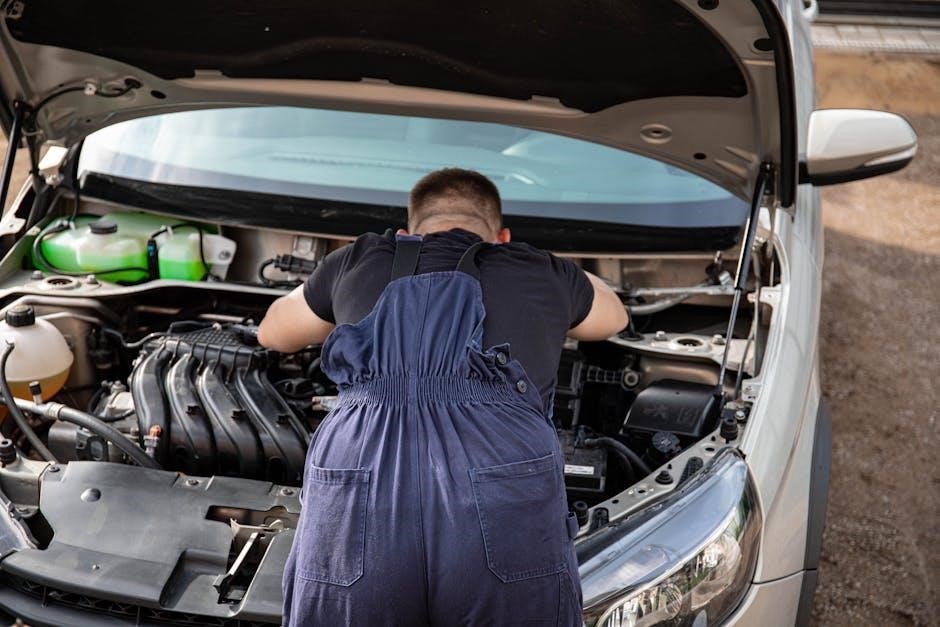
Key Diagnostic Areas for VAG Vehicles
Essential diagnostic areas include engine, transmission, braking, electrical, and exhaust systems; comprehensive analysis ensures optimal vehicle performance and safety.
Engine Management System Diagnostics
Diagnosing the Engine Management System (EMS) within VAG vehicles requires a nuanced approach, utilizing VAG-specific tools like VCDS to access detailed data unavailable to generic OBD2 scanners. Key areas of focus include live data monitoring of sensors such as the intake air mass sensor and pedal sensors, crucial for identifying performance issues.
Control procedures, as outlined in service manuals, allow technicians to actively test components and verify their functionality. Diagnostic Trouble Codes (DTCs) provide initial clues, but a thorough analysis of freeze frame data and correlating live values is essential for accurate diagnosis. Common EMS faults range from misfires and fuel trim imbalances to sensor failures and actuator malfunctions. Understanding the intricate interplay between various engine components is paramount for effective troubleshooting and repair within the VAG ecosystem.
Transmission System Diagnostics
VAG transmission diagnostics demand specialized tools, notably VCDS, to bypass the limitations of standard OBD2 scanners and access proprietary data streams. Focusing on both automatic and manual transmissions, diagnostics involve monitoring live data like transmission fluid temperature, gear engagement status, and adaptive values.
Identifying issues requires analyzing DTCs related to solenoid malfunctions, pressure imbalances, or internal mechanical failures. Control procedures allow for component activation tests, verifying proper operation of clutches, valves, and actuators. Adaptive learning procedures are crucial after repairs, ensuring smooth shifting and optimal performance. Common faults include slipping gears, harsh shifting, and complete transmission failure. A comprehensive understanding of VAG transmission control units and their interaction with other vehicle systems is vital for accurate diagnosis and repair.
Braking System Diagnostics
VAG braking systems, encompassing ABS, ESP, and electronic parking brakes, require in-depth diagnostic procedures utilizing VAG-specific tools like VCDS. Standard OBD2 scanners offer limited functionality, failing to access crucial control module data. Diagnostics involve monitoring sensor outputs – wheel speed sensors, brake pressure sensors – and actuator performance, such as ABS pump operation and solenoid valve function.
Analyzing Diagnostic Trouble Codes (DTCs) reveals issues like sensor faults, hydraulic unit malfunctions, or communication errors. Control procedures enable activation tests of components, verifying correct operation. Adaptive procedures are essential after repairs, particularly for electronic parking brakes. Common faults include ABS warning lights, spongy brake pedal feel, and uneven braking performance. Thorough understanding of VAG braking system architecture and control strategies is paramount for effective diagnosis and repair.
Electrical Systems Diagnostics
VAG vehicles feature complex electrical architectures, demanding specialized diagnostic approaches. Utilizing VAG-specific tools like VCDS is crucial for accessing all control modules and performing advanced diagnostics beyond basic OBD2 capabilities. Diagnostics encompass battery health checks, alternator output testing, and comprehensive circuit integrity verification.
Analyzing DTCs reveals faults within various systems – lighting, infotainment, power windows, central locking, and comfort control modules. Live data monitoring allows observation of voltage levels, current draw, and signal patterns. Component testing and activation functions verify actuator operation, like relay control and motor activation. Addressing communication errors on the CAN-bus network is often necessary. Proper grounding and wiring harness inspection are vital. Skilled technicians require a deep understanding of VAG electrical schematics and wiring diagrams.
Exhaust System Diagnostics
Diagnosing VAG exhaust systems requires a methodical approach, encompassing mechanical and electronic components. Initial inspection focuses on physical damage – leaks, corrosion, and broken hangers. Utilizing diagnostic tools, technicians monitor oxygen sensor readings (pre- and post-catalytic converter) to assess catalytic converter efficiency and engine combustion. Live data analysis reveals potential issues with exhaust gas recirculation (EGR) systems.
DTCs pinpoint faults within the exhaust system, including sensor failures, actuator malfunctions, and restrictions. Component testing verifies proper operation of exhaust valves and flaps. Backpressure testing identifies blockages in the catalytic converter or muffler. Addressing issues with diesel particulate filters (DPF) requires specialized procedures, including forced regeneration. Understanding the interplay between the exhaust system and engine management is crucial for accurate diagnosis and repair.

Specific VAG Vehicle Models & Support
VAG diagnostic support varies by model; the rebadged Ford Amarok (2023) lacks VCDS compatibility, while the Routan (2008) presents unique challenges.
Volkswagen (VW) Model Support Overview
Volkswagen’s extensive model range presents a varied landscape for diagnostic support. Generally, VCDS (VAG-COM Diagnostic System) provides comprehensive access to control modules and functions across most VW vehicles. However, certain models, particularly those developed in collaboration with other manufacturers, exhibit limitations.
For instance, the second-generation VW Amarok (T1) released in 2023, being a rebadged Ford Ranger, is notably unsupported by VCDS due to differing underlying architectures. Diagnostic access requires Ford-specific tools. Conversely, older models like the VW Routan (7B) from 2008, while supported, may present unique diagnostic considerations stemming from its Chrysler-based platform.
Successful VW diagnostics often necessitate awareness of these model-specific nuances, ensuring the correct tools and procedures are employed for accurate fault identification and resolution.
VW Amarok (T1) 2023 ⸺ Diagnostic Limitations
The 2023 Volkswagen Amarok (T1) presents significant diagnostic challenges due to its fundamental shift in platform. This generation Amarok is essentially a rebadged Ford Ranger, built upon Ford’s architecture and utilizing Ford’s electronic systems. Consequently, the VAG-COM Diagnostic System (VCDS), the cornerstone of VAG diagnostics, offers extremely limited functionality.
Attempting to use VCDS on a 2023 Amarok will reveal a lack of module recognition and access to critical vehicle data. Ford-specific diagnostic tools and software are absolutely required to effectively diagnose and repair issues within this model.
Technicians must be aware of this incompatibility to avoid wasted time and ensure accurate vehicle servicing. Relying on VAG-specific tools will prove ineffective for this particular Amarok iteration.
VW Routan (7B) 2008 ― Diagnostic Considerations
The 2008 Volkswagen Routan (7B) requires careful diagnostic approaches due to its unique origins. This minivan was co-developed with Chrysler, resulting in a blend of VAG and Chrysler technology. While appearing as a Volkswagen, many of its underlying systems are fundamentally Chrysler-based, impacting diagnostic procedures.
VCDS can access some modules, but complete functionality isn’t guaranteed. Expect limitations when attempting advanced coding or adaptations. Chrysler-specific diagnostic tools may be necessary to fully access all vehicle systems and retrieve accurate data.
Technicians should be prepared to utilize both VAG and Chrysler diagnostic resources for comprehensive troubleshooting. Understanding this hybrid nature is crucial for effective repair and maintenance of the Routan.
Audi Model Diagnostic Specifics
Audi vehicles, within the VAG group, often present unique diagnostic challenges due to their advanced technology and complex systems. Accessing certain control modules may require specific security codes or adaptations not commonly needed on Volkswagen models.
Audi’s sophisticated electrical architecture demands a thorough understanding of CAN bus systems and gateway control modules. Utilizing VCDS or equivalent VAG-specific tools is essential for in-depth diagnostics, coding, and adaptation procedures.
Furthermore, Audi’s higher-end models frequently incorporate proprietary diagnostic protocols, necessitating specialized equipment and software. Technicians must stay updated on Audi-specific diagnostic bulletins and procedures to ensure accurate and efficient repairs.

Common VAG Diagnostic Procedures
Essential procedures include reading/clearing DTCs, live data monitoring, component testing, and ECU control—vital for pinpointing and resolving VAG vehicle issues.
Reading and Clearing Diagnostic Trouble Codes (DTCs)
The foundation of VAG diagnostics lies in accurately reading and interpreting Diagnostic Trouble Codes (DTCs). These codes, stored within the vehicle’s various control modules, provide crucial insights into detected faults. Utilizing VAG-specific tools like VCDS (VAG-COM Diagnostic System) allows technicians to access a comprehensive library of DTCs, far exceeding the capabilities of generic OBD2 scanners.
Beyond simply reading the codes, understanding their meaning and associated freeze frame data is paramount. Freeze frame data captures the vehicle’s operating conditions at the moment the DTC was set, aiding in accurate diagnosis; Once repairs are completed, DTCs must be cleared to reset the system and verify the fix. However, simply clearing codes without addressing the underlying issue will only result in their recurrence. Proper diagnostic procedures, combined with thorough repair verification, are essential for lasting results.
Live Data Monitoring and Analysis
Beyond static DTCs, VAG vehicles offer a wealth of information through live data streaming. This feature, accessible via VAG-specific diagnostic tools, allows technicians to monitor real-time parameters from various sensors and control modules. Analyzing this data is crucial for identifying intermittent faults or conditions not severe enough to trigger a DTC. Parameters like engine temperature, throttle position, and oxygen sensor readings can reveal subtle performance issues.
Effective live data analysis requires a solid understanding of the vehicle’s systems and expected values. Comparing observed data to specifications, and graphing parameters over time, can highlight anomalies. Furthermore, observing correlated data streams provides a holistic view of system operation. This dynamic approach to diagnostics often uncovers root causes that would remain hidden with static code reading alone, ensuring accurate and efficient repairs.
Component Testing and Activation
VAG diagnostic tools excel in their ability to perform component testing and activation, going beyond simply reading fault codes. This functionality allows technicians to directly command specific components – such as fuel injectors, cooling fans, or valves – to operate, verifying their functionality without requiring physical manipulation. Observing the component’s response via live data confirms proper operation or pinpoints failures.
Activation features also enable control procedures for engine control units (ECUs), like intake air mass sensor control and pedal sensor checks. These tests streamline the diagnostic process, reducing time and eliminating guesswork. Proper component testing requires understanding the system’s operation and interpreting the results accurately. This hands-on approach, combined with live data, provides a comprehensive assessment of system health and ensures targeted repairs.
Control Procedures for Engine Control Units (ECUs)
VAG diagnostic systems provide detailed control procedures for Engine Control Units (ECUs), enabling technicians to directly influence ECU operation for diagnostic purposes. These procedures encompass a wide range of functions, including controlling the intake air mass sensor and verifying the functionality of pedal sensors. By commanding the ECU to perform specific actions, technicians can observe system responses and identify anomalies.
These control procedures are invaluable for pinpointing intermittent faults and confirming repair effectiveness. Accessing these functions often requires VAG-specific tools like VCDS, as generic OBD2 scanners lack the necessary depth of control. Understanding the specific parameters and expected results for each control procedure is crucial for accurate diagnosis and efficient repair work on VAG vehicles.

FiveM & VAG Vehicle Modifications
FiveM supports VAG vehicle modifications, including debadged SWAT police car packs, optimized textures, and realistic handling for enhanced gameplay experiences.
FiveM Debadged SWAT Police Car Packs
These specialized packs offer a compelling addition to FiveM servers, specifically designed for law enforcement roleplay. Featuring five distinct, non-ELS SWAT vehicles, the packs are engineered for seamless integration – a true drag-and-drop experience for server administrators.
A key characteristic of these packs is the deliberate removal of badging, enhancing the realism and operational aesthetic. Furthermore, each vehicle benefits from meticulously optimized textures, crucial for maintaining performance within the demanding environment of FiveM. This optimization ensures smooth visuals without compromising frame rates.
Beyond aesthetics, the packs prioritize authentic vehicle behavior. Realistic handling characteristics are implemented, providing a more immersive and believable driving experience for players. This attention to detail extends the roleplay possibilities, allowing for more engaging and dynamic scenarios. The packs represent a comprehensive solution for enhancing the law enforcement presence within your FiveM community.
Optimized Textures for FiveM
Within the realm of FiveM modifications, texture optimization is paramount for delivering a fluid and visually appealing experience. Poorly optimized textures can lead to significant performance drops, hindering gameplay and diminishing immersion. These optimized textures, specifically designed for VAG vehicle models within FiveM, address this critical issue.
The optimization process involves a careful balance between visual fidelity and file size. Textures are meticulously compressed and refined, reducing their memory footprint without sacrificing essential details. This results in faster loading times, reduced server strain, and improved frame rates for players.
Furthermore, these textures are tailored to the specific rendering engine of FiveM, ensuring compatibility and maximizing visual quality. They are designed to seamlessly integrate with existing vehicle models, enhancing their appearance without requiring extensive modifications. The goal is to provide a noticeable visual upgrade while maintaining optimal performance, creating a more enjoyable and immersive FiveM experience.
Realistic Vehicle Handling in FiveM
Achieving authentic vehicle handling is crucial for immersive gameplay within FiveM, particularly when utilizing VAG vehicle models. Default handling characteristics often fall short of replicating the nuanced driving experience of real-world vehicles. Therefore, meticulous adjustments to handling meta files are essential.
These adjustments encompass a wide range of parameters, including tire friction, suspension stiffness, weight distribution, and engine torque curves. The aim is to accurately simulate the vehicle’s responsiveness, stability, and overall driving feel. Realistic handling enhances the sense of control and provides a more engaging driving experience.
Optimized handling configurations consider the specific characteristics of each VAG model, accounting for factors such as vehicle weight, engine power, and drivetrain layout. This results in a handling profile that closely mirrors the real-world counterpart, offering a truly immersive and authentic driving experience within the FiveM environment.

Advanced VAG Diagnostic Techniques
Mastering guided functions, coding, and security access unlocks deeper VAG diagnostics, enabling module configuration and immobilizer system manipulation for comprehensive repairs.
Guided Functions and Adaptations
VAG diagnostic tools excel with guided functions, streamlining complex procedures like service resets, throttle body adaptations, and battery registrations. These functions offer step-by-step instructions, minimizing errors and ensuring correct execution. Adaptations allow customization of module settings, addressing specific vehicle issues or enabling features.
For example, adapting a new battery informs the charging system of its specifications, optimizing charging parameters and extending battery life. Guided functions also facilitate component testing, verifying functionality without requiring extensive technical knowledge. These features are crucial for efficient diagnostics and repair, particularly in modern VAG vehicles with intricate electronic systems.
Properly utilizing adaptations can resolve issues like incorrect idle speeds or malfunctioning sensors, restoring optimal vehicle performance. Remember to document all adaptations performed for future reference and troubleshooting.
Coding and Module Configuration
Coding within VAG systems involves modifying module software parameters to alter vehicle behavior or enable/disable specific features. Unlike adaptations which adjust existing settings, coding changes the fundamental module programming. This requires a thorough understanding of the VAG system architecture and potential consequences. Incorrect coding can lead to malfunctions or inoperable components.

Module configuration encompasses setting up individual control units, assigning addresses, and defining their roles within the vehicle network. Proper configuration is essential for seamless communication and functionality. VAG-specific tools provide access to coding blocks and parameters, allowing technicians to customize vehicle systems.
Always back up existing module coding before making changes, enabling restoration to the original configuration if necessary. Careful documentation of all coding modifications is crucial for future diagnostics and maintenance.

Security Access and Immobilizer Systems
VAG vehicles employ sophisticated security measures, including immobilizer systems, to prevent theft and unauthorized access. These systems utilize encrypted communication between the Engine Control Unit (ECU), key transponders, and other control modules. Diagnostic access to security-sensitive modules often requires specific security codes or keys.
Attempting to bypass or disable these systems without proper authorization is illegal and can render the vehicle inoperable. VAG-specific diagnostic tools provide controlled access to security functions, allowing qualified technicians to perform tasks like key coding and immobilizer system diagnostics.
Understanding the intricacies of VAG security protocols is paramount for effective diagnostics and repair. Incorrect procedures can trigger security lockdowns or damage sensitive electronic components.